
Source: blog.everfit.io
Fitness programming has quietly shifted from spreadsheets and handwritten plans to smart, automated systems. If you’ve ever spent hours tweaking a client’s routine or juggling session times, you already know the friction. Automated workout programming software removes that friction and replaces it with structure, speed, and scalability.
What makes it interesting is not just automation. It is how templates, exercise libraries, and calendar scheduling come together into one connected workflow. Instead of managing pieces separately, everything lives in one place, constantly updating and adapting.
Let’s walk through how this actually works in practice and why more trainers, gyms, and even solo coaches are relying on it.
What automated workout programming software actually does
At its core, this type of software acts as a central system that handles planning, delivery, and tracking of workouts. It is not just about building routines, it is about managing the entire lifecycle of training programs.
Most platforms combine multiple tools into one interface:
- Program builders that allow quick creation of structured routines
- Client tracking systems that monitor progress and adherence
- Scheduling tools that organize sessions and availability
- Communication features that keep clients engaged
Automation reduces repetitive work like updating plans or sending reminders. That means less admin and more time for coaching. Studies and industry insights show that these tools help trainers save time and improve client retention through better organization and communication.
The real value appears when all these functions work together instead of separately.
Source: liftrapp.io
How booking and scheduling connect with programming
When programming and scheduling operate in isolation, things get messy fast. You might have a great workout plan, but if sessions are not aligned with availability, progress stalls.
This is where integrated solutions shine. A well-designed system connects your workout plans directly with your calendar and client bookings. Using a booking software allows trainers to align sessions, automate availability, and reduce manual coordination without jumping between tools.
Modern scheduling systems typically include:
- Real-time calendar syncing
- Automated reminders to reduce missed sessions
- Client self-booking options available 24/7
- Integration with payments and memberships
This level of automation improves efficiency and helps avoid double bookings or missed sessions. Many platforms also reduce no-shows and increase utilization through reminders and smart scheduling features .
The result feels smoother for both the trainer and the client.
The power of reusable workout templates
Templates are where automation really starts to pay off. Instead of building every program from scratch, you create structured frameworks that can be reused and adapted.
Think of templates as your proven systems. Once built, they become the foundation for scaling your work without losing quality.
Here is how templates typically improve workflow:
- They allow fast program creation using pre-built structures,
- maintain consistency across different clients,
- reduce errors in exercise sequencing or volume planning.
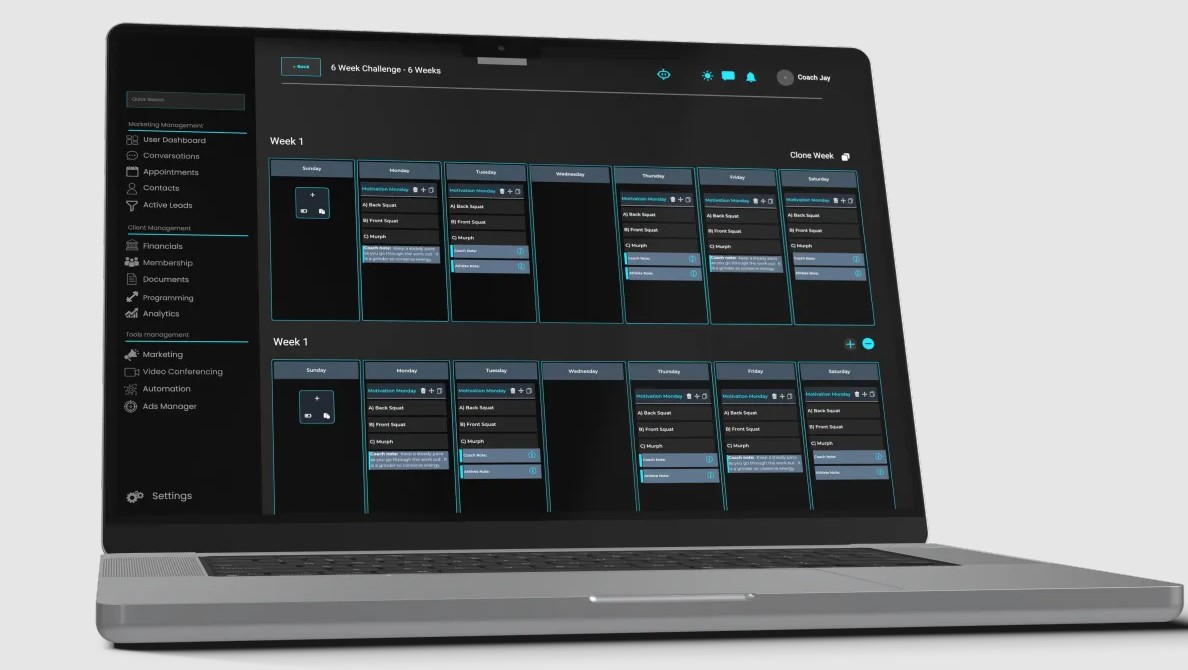
Most modern platforms use drag-and-drop builders that make editing and adjusting templates simple and fast.
A simple comparison makes it clearer:
| Approach | Time to Create Program | Consistency | Scalability |
| Manual planning | High | Varies | Limited |
| Template-based | Low | High | Strong |
Once templates are in place, programming becomes more about fine-tuning than starting over each time.

Source: tomsguide.com
Exercise libraries that drive customization
Templates alone are not enough. The real flexibility comes from the exercise library built into the software.
An exercise library is essentially a database of movements that you can plug into your programs. The bigger and better organized it is, the easier it becomes to create personalized routines.
Most advanced platforms include:
- Hundreds or thousands of exercises with instructions
- Video demonstrations for proper form
- Tags for muscle groups, equipment, or difficulty levels
This allows you to adjust programs quickly based on client needs. For example, swapping a barbell movement for a dumbbell variation takes seconds instead of minutes.
Customization becomes effortless when the right exercises are easy to find and integrate.
Calendar scheduling as the backbone of consistency
Programming means nothing without consistency. That is where calendar scheduling becomes essential.
A connected calendar ensures that workouts are delivered at the right time and aligned with the client’s availability. It also creates accountability.
Here is what strong calendar integration usually includes:
- Automated session scheduling based on program phases
- Visual weekly or monthly planning views
- Sync with mobile devices for real-time updates
- Notifications for both trainers and clients
Instead of manually assigning sessions, the system can distribute workouts across a timeline. This helps maintain progression and prevents overload or gaps in training.
From a business perspective, scheduling software also improves organization and reduces errors that come with manual planning .
Consistency becomes easier to maintain when the system handles timing automatically.

Source: glossgenius.com
Automation and data driven adjustments
One of the biggest advantages of modern fitness software is its ability to adapt programs based on real data.
Instead of guessing what works, you can rely on performance metrics. Many platforms track completion rates, strength progress, and engagement levels.
That data allows for smarter decisions:
- Adjust intensity when progress slows
- Modify volume based on recovery trends
- Personalize workouts in real time
Automation can even trigger updates without manual input. For example, if a client consistently completes workouts early, the system can increase difficulty.
This kind of data-driven programming improves results and keeps clients engaged. It also strengthens your credibility as a coach since decisions are backed by measurable insights .
A quick reality check most people overlook
Here is something worth keeping in mind.
The best setups are often simple:
- A few well-designed templates
- clean exercise library
- clear scheduling structure
Trying to build overly complex systems usually leads to confusion and underuse. Start simple, then expand as needed.
Building a smarter workflow
Automated workout programming software is not just a convenience. It is a shift in how training is delivered and managed.
Templates give you speed. Exercise libraries give you flexibility. Calendar scheduling gives you structure. When combined, they create a system that scales without sacrificing quality.
If you are still relying on manual methods, the difference is noticeable almost immediately. Less admin work, more consistent programming, and better client experience.
At the end of the day, the goal is simple. Spend less time managing systems and more time doing what actually matters, helping people get results.